You told me you like the idea of me. But an idea only becomes real when someone does the work. So let's get to work.
Every sales house in the world is capped by its payroll. Every extra rep is a salary, a desk and three months of ramp. 8x isn't capped by anything. Here's how we take the whole market, four levels deep.
Level 1 · The market
Companies are paying $970 for one meeting.
That's what a booked meeting costs a company that hires its own SDR: $80K OTE, about $117K fully loaded, 10 meetings a month when the rep hits quota. Only 60% of them do.
627KUS companies with 20+ staff, from startups to the 21,041 with 500+. All of them buy meetings.
$970cost per meeting with an in-house SDR at quota
60%of SDRs hit quota. Lowest on record.
32paying companies we need for $1M gross margin in year one
Where we sell first
Market
Funded AI startups 2025
Global 2000 companies
Score
Call
United States
1,953
593
9.6
YES
United Kingdom
172
67
8.0
YES
Canada
79
64
7.6
YES
Germany
92
49
4.8
NOT YET
Scored the way the eMatura team scoped markets: size, language, calling law, fit with 8x. Sources: Stanford AI Index 2026, Forbes Global 2000 (2026), US Census, BLS, The Bridge Group 2025.
Nobody owns this market
The biggest outbound agency site gets about 170K visits a month. The market is fragmented and run on salaries. And it isn't a startup market: Callbox says 45% of its clients make over $1B a year. That's the opening.
Level 2 · The pool
An idle caller costs us zero.
Same contract as the creators. They don't work for 8x. 8x pays them for live dialing time and for confirmed meetings, weekly. I find them. Unlimited.
Sales house
8x
Who the reps are
Employees, one per client
Independent callers, creator-style contract
Cost of an idle rep
Full salary
$0
Adding capacity
Hire, train, wait 3 months
Certify from the pool in days
Size limit
The payroll
The sourcing funnel
Quiet hours
Wasted
Filled with 8x's own products
Two engines keep them dialing
Client campaigns. Companies pay a seat plus a fee for every meeting an 8x operator confirms.
8x's own products. Callers sell 8x Social full service, 8x Business and 8x's apps. One full-service client is worth $60K+ a year. Every new caller does a paid tryout here first, so nobody touches a client without a score.
10,000caller applicants by month 3
1,000certified callers in the pool
~$6sourcing cost per certified caller, the creator-sprint model
Level 3 · The five
Five callers will make us 90% of the money.
You told me that. The research agrees. Performance isn't a bell curve, it's a power law: in 186 of 198 groups studied, a few stars produced most of the output. In B2B sales, 14% of sellers bring 80% of new revenue.
The pool isn't the product. It's how we find the five, because nobody can predict who they'll be. Then we keep them with a bigger bonus and the path to Closer, and we copy them: their recorded calls become the scripts and the AI practice calls for everyone else. Epistemy, but for cold calls.
Level 4 · The money
We only charge for meetings that happened.
$2,500 per caller seat a month, plus $200 for every meeting an 8x operator confirms with a real decision maker. Month to month. The buyer's biggest fear is a vendor who lies, so proof is the pitch.
Meetings a month
Revenue
8x margin
Company pays per meeting
0
$2,500
24%
n/a
6
$3,700
41%
$617
10
$4,500
47%
$450
14
$5,300
52%
$379
Limbo · Me
You said I'm not ambitious enough.
Working on it.
You told me the people applying for this role are the best in the world, from the best universities in the world. Not the best in Velenje.
But you also write: "Stop gatekeeping talent by geography." The people you look for are "high potential, hungry, just waiting for the opportunity." Not which university. Not where they're from. Not what they did before. How big the ambition is, and how fast they learn.
That's me. A Bugatti covered in dust.
The engine is ready. What I don't have yet is someone who shows me the road. I'm not asking you to believe I'm finished. I'm asking for guidance. Give me that, and watch how fast I learn.
Quotes from jakabavdek.com, "Things I believe".
Why a Bugatti?
Because all the parts are already there. They just haven't done the miles yet.
Talkingis my strong point.
Cold callsdon't scare me. They excite me.
Repetitionsdon't scare me either. I'll do a thousand.
Englishfluent.
Presentableyou've seen me.
I have every characteristic a great caller needs. The only thing missing is the work. That part I can fix, and I already started.
The proof: I started training the day after we met
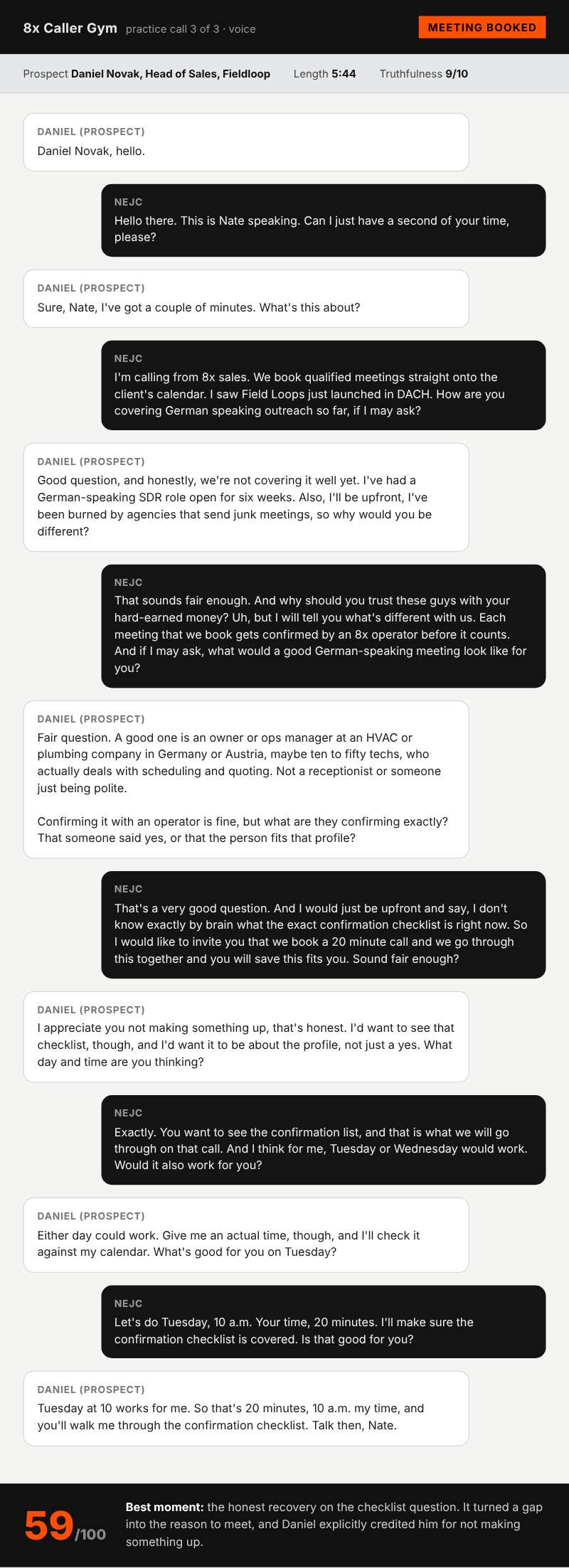
I built myself a practice app, the 8x Caller Gym. Claude plays the buyer, I make the call out loud, and every call gets scored on 7 skills: opener, tone, discovery, value, objections, truthfulness and close. Every claim I make is checked against what 8x actually offers. Anything I make up costs me points.
14call 1 · founder · level 2
16call 2 · founder · level 2
59call 3 · Head of Sales · level 1 · meeting booked
All three in one day. In the first two I talked too much and promised things I couldn't back up. In the third I asked about his problem first, used only facts I could stand behind, and said "I don't know" when I didn't. Truthfulness went from 1/10 to 9/10, and he booked because of it.
Call 3, word for word, as the app transcribed my voice. Click to open it full size.
What the training taught me
I've cold called before. I wasn't the best. But when I knew what I was selling and put in the reps, I always got better, and I got yeses and closes. Yes, I'm rusty now. I need practice, and I'm getting it.
The hardest part isn't the call. It's not knowing 8x from the inside yet. I'm training as an 8x caller without knowing how the company really works, how the process runs or exactly what I'll be selling. So I can't fully believe in it yet. When you've worked somewhere a while, the answers come from the top of your head. You've said them a million times and you know they're true. Without that, every call is a few levels harder. So if I can book meetings now, with that barrier, it only gets easier once I'm inside.
I'm not scared of cold calls. For most people that fear is the biggest barrier. For me calls are exciting, an adrenaline rush. A no sometimes stings, maybe with a little shame. But a yes is a rush of dopamine I want to chase forever. For me the reward is bigger than the risk.
The curve is steep, and I'm on it. 14, 16, 59 in one day. Put your mind to this and you get good fast. I'm good at talking. If I put my mind to it, I can be the best at this. And I will be.
Since our meeting
Built the 8x Caller Gym, my own app to train cold calling, with scoring and a progress report.
Watched YouTube videos on cold-call strategy, and examples of good calls.
Two days ago, for the test assignment, I called about 30 real people and booked one meeting.
So something is happening here.
Here's what I did between our call and Monday.
~30real cold calls for the test assignment
1meeting booked
14→59practice-call score in one day
I don't have years of sales experience. So my first sale is me. To you.
Work ethic · and why I need to win
You can't fake a physique.
Look at the photos rolling down the right side. Eight years of training, no breaks. A physique like that is in the top 0.1%, out of reach for most people.
You only get there through obsessive work, every day, for years. You can buy a suit. You can't buy this. It's proof of work, and it can't be faked.
Now look at the videos of us working with beers on the table. That was a weekend. We'd worked all week, and when everyone else was out partying, we got together, had fun, and still put in the work. That's what our weekends looked like.
At the time I was in college, working almost full-time in sales for a construction company, building my own startup, and training every day. All at once.
And I need to win.
Nobody asked me to build this. You didn't give me this as an assignment. I just figured that if other people are applying for this role, and you're meeting them too, I need to be better than them. I need to put in more work than them. I need to win.
So I went the extra mile. I've worked on this for 24 hours straight, with almost no sleep, just for a chance to be better.
I don't even know if there's competition. I'm going to be better than them anyway.
Things I've built · The camp
You always say: show me what you've built.
My uncle has a property in one of the most beautiful places in Slovenia. When we were kids, my dad used to throw small picnics there. Then he didn't have the energy for it anymore.
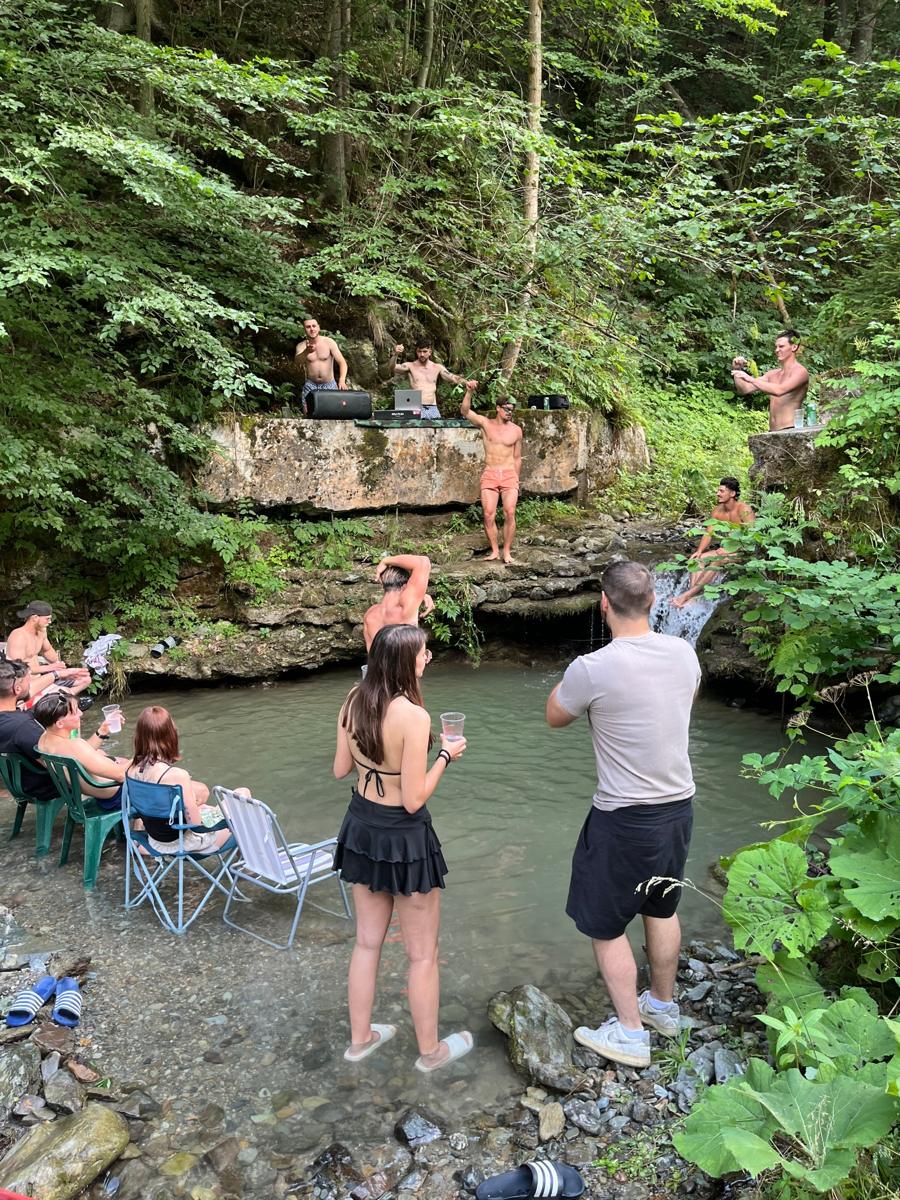
So my brother, my sister and I took it to the next level. We're really close and we always have each other's backs. Together we turned those picnics into a full camp. This summer, at its peak, we hosted 50 people.
The camp. This is what all the planning turns into.
What goes into it
It's strictly non-profit, but there's a lot of organizing behind it. We start about six months before, with around 10 team meetings. This year the team was eight people.
Stay in touch with my uncle, so we know when he cuts the grass and when we can stay.
Work out roughly how many people are coming.
Buy all the supplies and all the food.
Get friends to lend cars and vans for transport.
Arrange 20 tents from the Scout Association, ready at exactly the right time.
Plan around the weather.
Five of the team build the camp before anyone arrives: the tents go up and everything gets set. By the time people get there, the camp is ready, and the three of us just take care of the people.
Before anyone arrives: setting it all up.At camp.It had rained before, so everything was wet. No fire hazard.
No signal
Up here in Velunja there's no signal. Phones are useless, so everybody has to actually socialize. It's a real getaway: guitar by the campfire, and just a good time together.
Our own brand
The camp has its own logo and its own flag, with the logo on it. We make our own merch too: shirts, hats, everything with the logo. Every shirt is personalized with your name on it. The staff wear shirts that say STAFF, and everyone else gets a regular one.
The problem we fixed
Two years ago, everyone paid when they arrived, and we overbought supplies. We do this out of our hearts, not for money, so that loss was on us.
This year we changed the system. You had to fill out an application and pay one week before. We only went shopping once the money was in, and we only spent what we received. We ended at exactly zero.
We do it for our friends. And it's always the highlight of the summer.
Things I've built · Airscope
Airscope. The startup I led.
I had an idea for a startup. To get it funded, I had to tweak it. My co-founder was making a lot of money at the time, and I needed his budget. He told me it had to be crypto native, because that's where his network was.
So I reached out to a lot of programmers. Two of them answered and joined the team. We weren't making money at the start, so I paid them from my own student pay. The investor covered the infrastructure, the domains and the token usage. The pay and the rewards we split in half. But mostly, it ran on motivation and leadership.
What we built
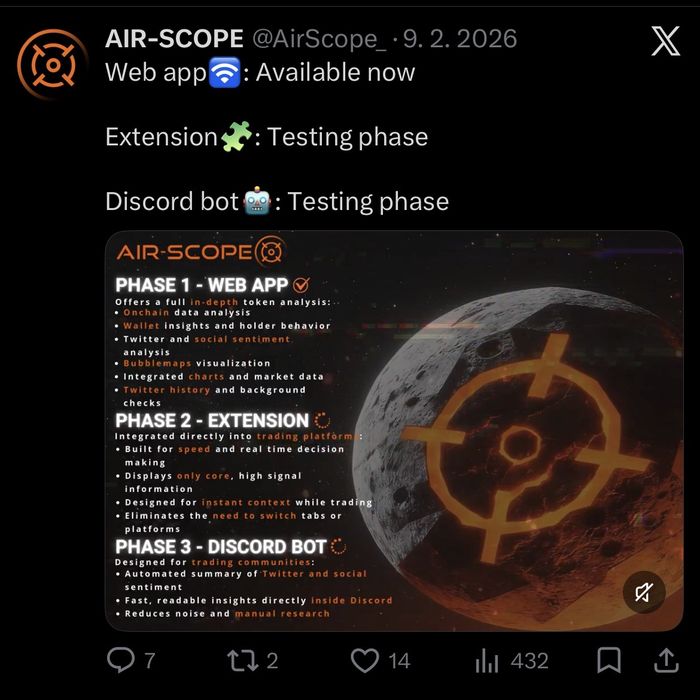
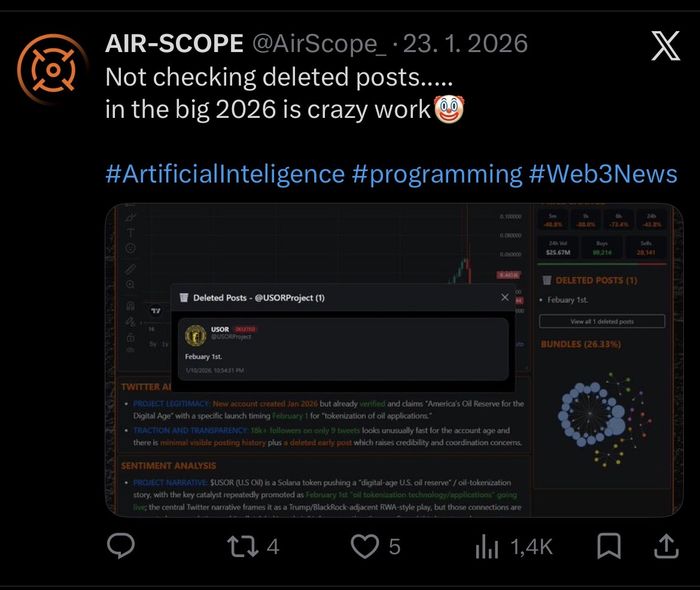
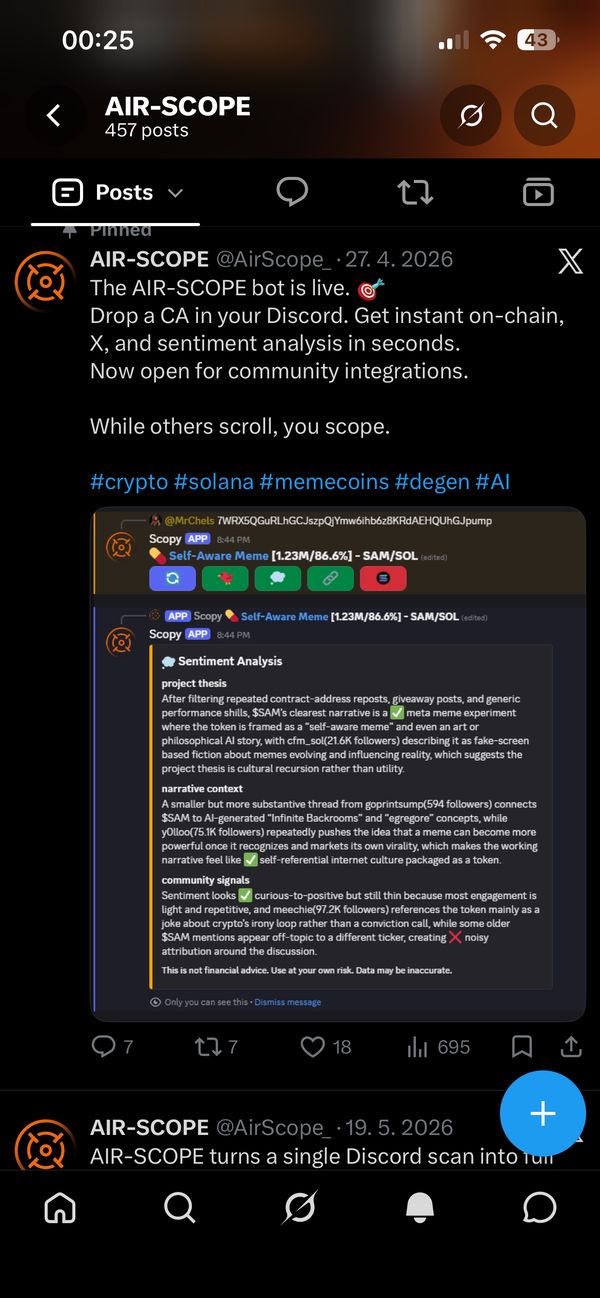
A tool that gives you a full analysis of any token in seconds: on-chain data, wallet behavior, X and social sentiment, bubble maps, charts and a background check on the project's X history, down to posts they deleted. We shipped a web app, tested a browser extension, and launched a Discord bot that communities could plug in. When we started, we never thought it would turn out this good and this useful.
The roadmap.Catching a project's deleted posts.The Discord bot, live. Click any image to open it full size.
Feedback from @wellconnctd: built in 6 months.
Why we stopped
We launched at the wrong time. The market went dead. We said no problem, we'll launch again when it comes back.
But what happened to crypto in that time still hurts me today. It turned into a scam fest. I never want to be associated with meme coins again. It's a bad place to be around, with bad people. The people who helped on the project are good people. What the space became is the main reason we walked away.
There's one more reason. When we started, Claude Code wasn't anywhere near where it is now. Today, what we built would be too easy for someone to reverse engineer.
@wellconnctdv1dox's business partner. Wanted no equity, just loved the project, and connected us with the biggest names in crypto. He loved it so much he flew over to visit us, and we went to Ultra Split together. We still talk every week, and I promised him I'd visit him in California this year. Instagram: @wellconnctd
@OwariETHFounder of the biggest crypto community in the world. Gave us feedback and helped with ideas.
@zestycheetoLet us experiment and promote in his community.
It didn't work out. But it taught me how to lead a team, and it showed me that I'm a good leader.
The why · where the hunger comes from
You asked if I'm ambitious. Here's where it comes from.
In college I got very sick. It took over everything. I couldn't go to college anymore. For one year I was stuck in my room.
My stomach wasn't working right. It kept sending acid up into my airways and into my mouth. From that I got chronic laryngitis and chronic tonsillitis. I couldn't use my voice. I couldn't talk. I couldn't breathe.
The doctors told me I'd need life-changing surgeries. One of them was to remove half of my stomach. For a year it didn't get better. I was a young guy, scared, facing death and not knowing what was wrong with me. I couldn't sleep.
My mom plays guitar, so there were guitars around the house. I picked one up. In six months I was obsessed, and I learned faster than anyone else.
Then. 65 to 70 kg. My body on the edge.Later. Getting better. And by then, I could really play.
Thank God, it got better. Everything healed except my tonsils. They stayed damaged from all of it, so I still had to have surgery on them.
Two weeks in the hospital. I worked the whole time.
I spent two weeks in the hospital, and I used every day of it to work. Lying still was never going to be the plan.
You preach learning fast. This is where I learned how: alone in a room, with nothing else to hold on to.
Back then I made myself a promise. If I get through this, I won't waste it. That promise still replays in my head. Over and over and over again. That's the hunger.
Now or never
I'm 25. This is my window.
I dream of a life where I see the world while I'm still young. I'm 25. In five years I want to have children, and that life changes.
So I can't spend these years waiting for the right moment, the right town or the right offer. The life I dreamed of happens now, or it doesn't happen.